Pet breed guide
Smooth Collie: size, temperament, care and photo
The Smooth Collie is a British herding breed with a short, close-fitting coat. A dense undercoat lies beneath it: shorter hair simplifies some grooming tasks, but does not remove shedding, training or a dog’s everyday needs.
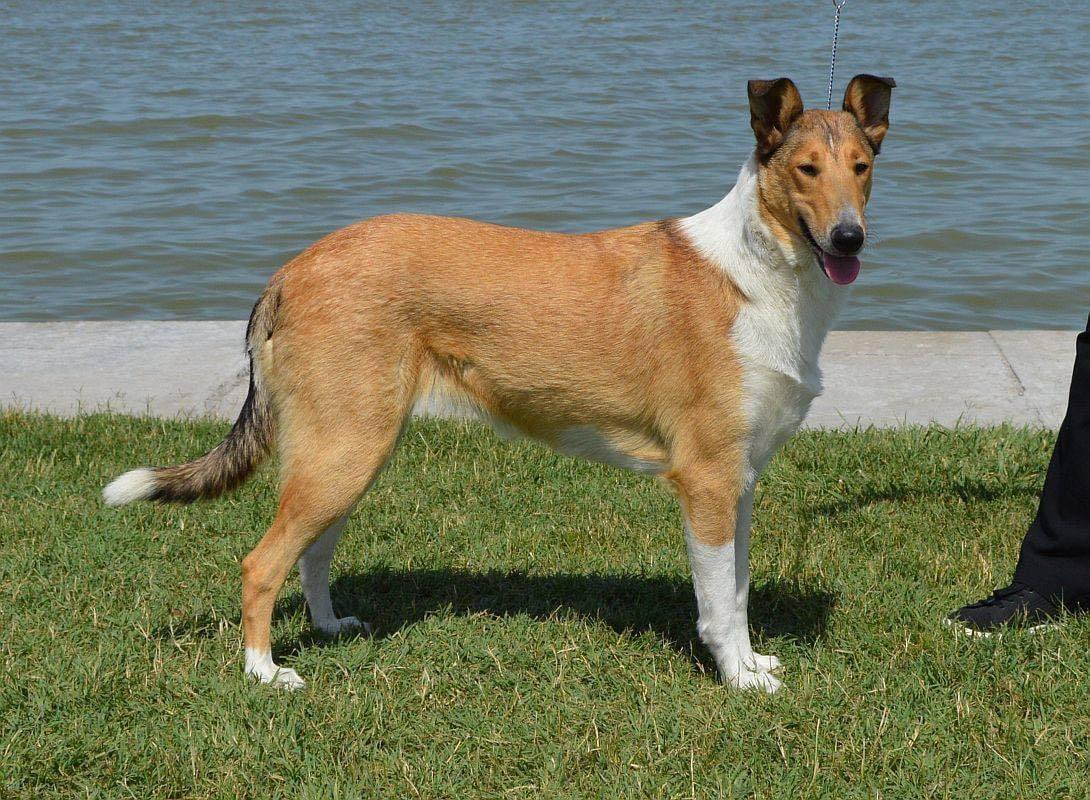
Photo: Mwensley · CC BY-SA 4.0
SmoothCollie Sable.jpg
https://commons.wikimedia.org/wiki/File:SmoothCollie_Sable.jpg
https://creativecommons.org/licenses/by-sa/4.0/
Original file, unchanged.
At a glance
- Origin
- Great Britain; FCI No. 296, herding group.
- Height at the withers
- Males 56–61 cm; females 51–56 cm in the FCI standard.
- Standard weight
- Males 20.5–29.5 kg; females 18–25 kg. Breed references, not individual weight targets.
- Coat
- Short, close-fitting outer hair with a very dense undercoat.
Appearance and identifying features
The smooth covering makes the body outline easy to see, without the Rough Collie’s abundant ruff and long feathering. The head is wedge-shaped and the eyes almond-shaped. When attentive, the ears rise with their tips folded forward. Identify a breed through ancestry and features together: a short coat alone cannot separate a Collie from every similar-looking dog.
Smooth Collie colours
The Royal Kennel Club describes sable and white, tricolour and blue merle. Sable includes golden and darker shades; tricolour combines black, tan and white areas. Blue merle has a silvery-blue background with a black marbled pattern. Our photograph shows a sable-and-white dog; the other colours need separate illustrations.
Temperament at home
Breed descriptions emphasise friendliness and activity. An individual dog’s habits also reflect experience: discuss how it copes with unfamiliar places, greets people and spends time without organised tasks. During a first meeting, watch ordinary behaviour instead of asking for as many tricks as possible. Family life needs clear expectations and access to a quiet resting place.
A short coat still sheds
The Royal Kennel Club lists shedding and weekly grooming. That provides a starting point for planning, rather than a rule against brushing more often when needed. Ask someone experienced to demonstrate suitable tools and a familiar routine. Introduce paw checks and brushing in brief rewarded stages. A short coat alone does not make a dog hypoallergenic.
Walking, training and agility
Plan a realistic working day: a walk with opportunities to explore, a few understandable exercises and time to rest. Waiting, recall and redirecting attention are useful whether or not you pursue sport. Reward-based teaching helps explain the action you want. If you choose agility, start with handler communication and equipment familiarisation, adjusting exercise to age and preparation.
How it differs from a Rough Collie
The obvious distinction is the coat, not the presence or absence of herding roots. A Smooth Collie is not created by clipping a Rough Collie. FCI has a separate standard, No. 296, while Rough Collies are described in No. 156. In American AKC material, rough and smooth are Collie varieties, so terminology can differ between countries’ breed resources.
Similar names and breeds
Rough Collie
Its abundant coat involves a different grooming workload. See the separate guide for appearance, a photograph and size references.
Smooth-coated Border Collie
Border Collies can also have smooth coats, but they are not Smooth Collies. Check the full breed name and ancestry.
Shetland Sheepdog
A distinct breed, not a small, short-coated Collie variety. Its guide can help keep similar names separate.
Before choosing a pet
- Confirm the exact breed in the documents: Smooth Collie and smooth-coated Border Collie mean different things.
- Ask about adult size, relatives’ behaviour and the animal’s usual daily routine.
- Find out which breed screening has been completed and where the results are recorded; coat colour cannot establish health.
- Consider time for walks, teaching, grooming and a quiet place to rest in your normal home environment.
Questions and answers
Is a Smooth Collie a clipped Collie?
No. Smooth Collies have their own breed history and FCI standard. Clipping a Rough Collie does not change its breed.
What height and weight does the Smooth Collie standard give?
FCI lists males at 56–61 cm and females at 51–56 cm; weights are 20.5–29.5 kg and 18–25 kg respectively. These figures do not replace individual assessment of body condition.
Are Smooth Collies non-shedding?
No. They have a very dense undercoat, and short outer hair does not mean a hair-free home.
How is it different from a short-coated Border Collie?
These are different breeds with separate standards. Short-coated describes hair length, not identical ancestry or temperament.
Is grooming easier than for a Rough Collie?
The close-fitting coat generally avoids the work involved in long feathering and a ruff. Both dogs still need brushing and cleaning; consider the individual coat and the dog’s grooming habits.
Sources and verification
Breed descriptions, photograph and reuse terms checked on 1 November 2026.
Source addresses
- https://www.fci.be/en/nomenclature/COLLIE-SMOOTH-296.html
- https://www.fci.be/Nomenclature/Standards/296g01-en.pdf
- https://www.royalkennelclub.com/breed-standards/pastoral/collie-smooth/
- https://www.royalkennelclub.com/search/breeds-a-to-z/breeds/pastoral/collie-smooth/
- https://www.akc.org/dog-breeds/collie/
- https://www.rspca.org.uk/adviceandwelfare/pets/dogs/training
- https://www.akc.org/expert-advice/dog-breeds/do-hypoallergenic-dog-exist/