Compare dog breeds
Border Collie vs Australian Shepherd: differences and choosing a dog
The Border Collie and Australian Shepherd, often called the Aussie, are distinct herding breeds. They share an active background and some coat colours, while having different histories and standards. This comparison connects visible differences with the everyday decisions involved in choosing an individual dog.
Border Collie
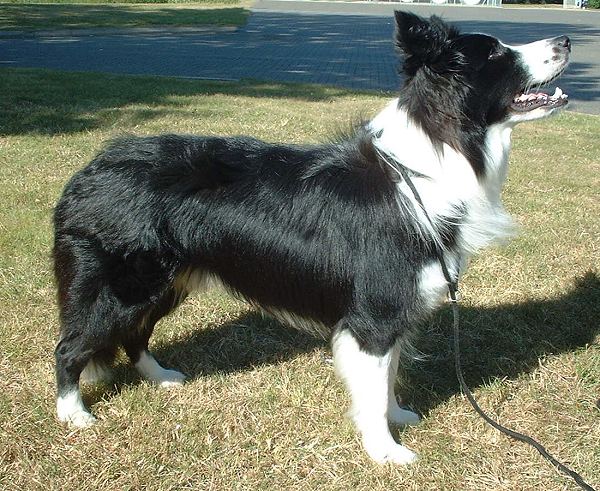
Photo: Sannse · CC BY-SA 3.0
Border Collie 600.jpg
https://commons.wikimedia.org/wiki/File:Border_Collie_600.jpg
https://creativecommons.org/licenses/by-sa/3.0/
Original file, unchanged.
Australian Shepherd (Aussie)
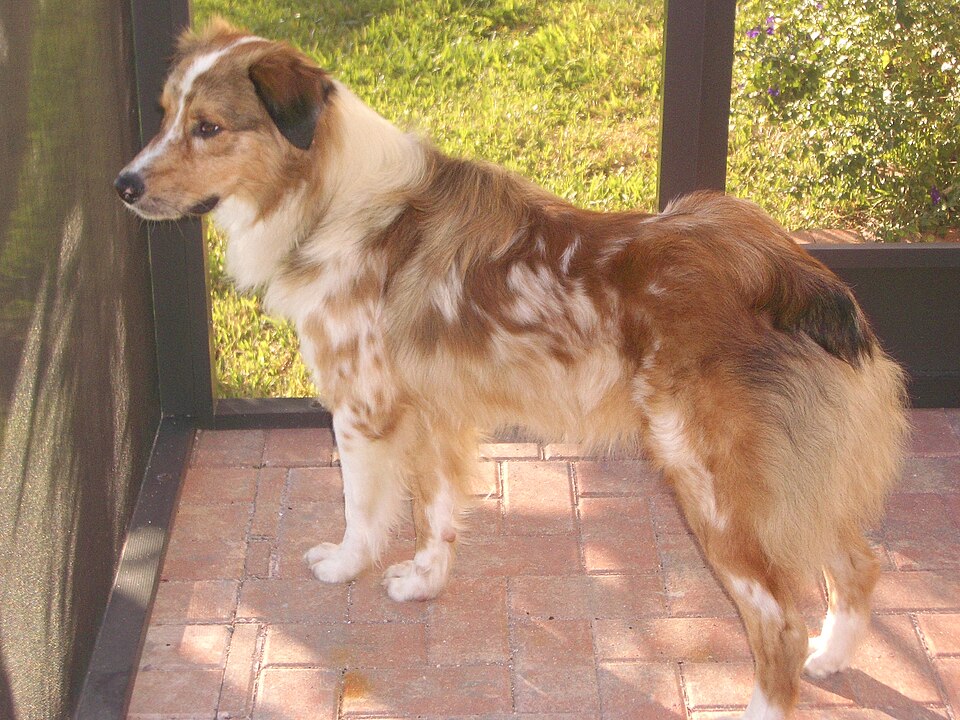
Photo: ReignMan · Public domain
Australian shepherd.jpg
https://commons.wikimedia.org/wiki/File:Australian_shepherd.jpg
https://commons.wikimedia.org/wiki/Template:PD-user-w
Wikimedia thumbnail; no cropping or colour changes by SofiaHorses.
These photographs show two individual dogs, taken in different light and at different scales. They cannot be used to measure relative size or judge temperament.
The main differences at a glance
Height figures follow FCI standards. On a narrow screen, scroll the table sideways to see both breeds.
| Feature | Border Collie | Australian Shepherd (Aussie) |
|---|---|---|
| Origin | Great Britain; FCI No. 297. | United States; FCI No. 342, despite the Australian name. |
| Height at withers | Ideal male height: 53 cm; females slightly less. | Preferred: males 51–58 cm; females 46–53 cm. |
| Coat | Smooth or moderately long; with an undercoat. | Medium length, straight or wavy; with an undercoat. |
| Ears in the standard | Erect or semi-erect. | Triangular; fold forwards or to the side when alert. |
| Tail | Moderately long. | May be naturally long or naturally short. |
| Colours | Many colours, including merle; not only black and white. | Black, red, blue merle or red merle, with optional white and tan markings. |
| Activities | An active herding dog needing training and shared tasks. | An active herding dog; ASCA also describes guardian tendencies. |
| Grooming | Regular brushing; sheds. | Regular brushing; sheds. |
How to tell a Border Collie and an Aussie apart
Look at several features together: outline, coat, ears and tail. A Border Collie can have a smooth coat, while the Aussie standard describes a medium-length coat. Coat volume can change the impression of the body underneath. Their height references overlap, so a single measurement cannot reliably identify the breed.
Both breeds can be merle. Blue eyes are not a decisive sign either: Aussies can have several eye colours. A short tail is not compulsory for an Aussie. Ancestry records are more useful than guessing from a photograph; resemblance in a crossbreed does not establish its parentage.
Temperament: what to compare when you meet
The Royal Kennel Club describes the Border Collie as an active herding dog that needs engagement. ASCA highlights the Aussie’s bond with its family, herding and guardian tendencies; some individuals are reserved with unfamiliar people. These descriptions suggest questions to ask an owner, rather than predicting every puppy’s behaviour.
Watch how a dog greets someone, moves from an exciting activity to a quieter task, and rests after a walk. Ask about an ordinary day and the behaviour of adult relatives. The claim that an Aussie is always calmer than a Border Collie oversimplifies a decision influenced by the individual’s background, age and experience.
Training, walks and agility
Both dogs benefit from a workable routine with opportunities to explore on walks, learn a short task, interact and rest. You might practise recall, calm waiting and finding a familiar toy at different times of the day. That is an example of organising activities, not an exercise prescription or a promise of results.
RSPCA recommends rewards, short regular training sessions and gradually introducing distractions. If agility interests you, meet a trainer before choosing a dog. Discuss your experience, the available training space and a realistic schedule. Breed identity does not determine a competition height category or guarantee sporting success.
Coat care and everyday grooming
The Royal Kennel Club lists both breeds as shedding and needing grooming more than once a week. Coat length and undercoat density vary between individual dogs. Ask to see the adult dog’s normal brushing routine and work out how that task will fit into your week.
Consider practical details: checking the coat after a walk, keeping equipment accessible and arranging care when travelling. A show photograph does not reveal what a dog looks like after a wet outing. A smooth-coated Border Collie still needs care, and not every Aussie has an equally dense coat.
Apartments, children and a first dog
Start with the household routine: who will take the morning walk, who can help during the day, and where will the dog rest quietly? For either breed, checking whether that plan is workable is more useful than an unconditional label such as apartment-friendly. A garden does not organise activities and companionship by itself.
If you live with children or other animals, ask the current owner about observed behaviour rather than relying on breed reputation. Plan gradual introductions, separate spaces and adult involvement. First-time owners can arrange training support in advance and meet several adults of both breeds before deciding.
Which should you choose? Questions before deciding
Answer these questions for each individual dog. If the answers are still unknown, spend more time getting acquainted before choosing by colour or an intelligence ranking.
- What attracts you: shared walks, learning skills or a particular sport? Does that match the individual dog’s interests?
- How does the dog behave in familiar surroundings, and what help does it need to settle?
- Who will provide walks and care on working days, holidays or when the family schedule changes?
- Which ancestry documents and recommended screening results are available, and who can explain them?
- Can you meet an adult dog or relatives and discuss the characteristics of that particular line?
- Would an adult with an established routine suit you better than a puppy?
Questions and answers
Are Australian Shepherds and Border Collies the same breed?
No. The Australian Shepherd has FCI standard No. 342 and the Border Collie No. 297. Shared colours and herding work do not make them varieties of the same breed.
Which is bigger: a Border Collie or an Australian Shepherd?
Their height references overlap. FCI gives an ideal male Border Collie height of 53 cm, compared with a preferred 51–58 cm for male Aussies. Compare sex and individual dogs; photographs at different scales cannot establish size.
Which is calmer or easier for a first-time owner?
There is no universal winner. Meet adult dogs, ask about their habits and consider your time, support and willingness to train. Being active or trainable does not mean arriving with ready-made obedience.
Which breed sheds less?
Both shed and have undercoats. The checked sources do not establish a reliable universal ranking for how much hair each leaves behind. Consider the individual dog and plan for regular grooming.
Can I identify an Aussie by blue eyes or a short tail?
Those features are not enough. Aussies can have different eye colours and naturally long tails; Border Collies can also be merle. Consider multiple features alongside ancestry information.
Which breed is better for agility?
Both can participate. The decision depends on the individual, preparation, interest and the owner’s opportunities. Start by talking with a trainer; ambitious sporting plans do not replace suitable everyday living arrangements.
Sources and verification
Descriptions and photo reuse terms checked on 1 November 2026. Practical questions are editorial guidance for comparing individual dogs.
Source addresses
- https://www.fci.be/Nomenclature/Standards/297g01-en.pdf
- https://www.fci.be/Nomenclature/Standards/342g01-en.pdf
- https://asca.org/competitive-programs/conformation/breed-standard/
- https://asca.org/finding-an-aussie/choosing-an-aussie/
- https://asca.org/finding-an-aussie/is-an-aussie-right-for-you/
- https://www.royalkennelclub.com/search/breeds-a-to-z/breeds/pastoral/border-collie/
- https://www.royalkennelclub.com/search/breeds-a-to-z/breeds/pastoral/australian-shepherd/
- https://www.rspca.org.uk/adviceandwelfare/pets/dogs/training